Research and Development
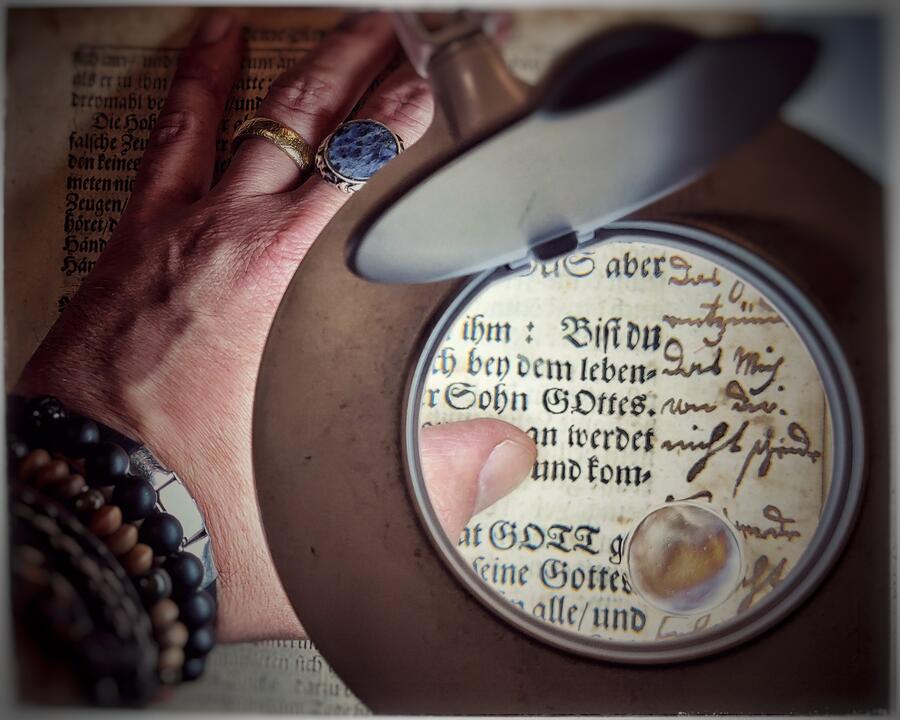
Books can endure across centuries, but someone must care for them if that is to happen.
The idea behind Libriproibiti has always been the same: to bring “inaccessible” books (due to their cost) to a wider audience, while preserving as much as possible the original style of the work in its own time.
Let me give you an example: today, an original 1519 edition of the Malleus Maleficarum (a post-incunable) can be worth between €6,000 and €12,000 on the rare book market. To own such a volume would require a sum far beyond the reach of most people—or settling for a facsimile paperback edition. This puts the bibliophile, or even the simple collector of rare things, in a difficult position.
Libriproibiti stands somewhere in between, promoting a meaningful compromise between rarity and the “consumer” market. Our production focuses on recreating a book as it would have appeared at the time of its editio princeps, preserving as much of it as possible.
Books can outlive centuries, yes, but sometimes restoration alone is not enough.
The purpose behind Libriproibiti’s work is, above all, the preservation—across time—of works that would otherwise vanish into oblivion, as stated in UNESCO’s Memory of the World project:
The world’s documentary heritage belongs to all, and should be fully preserved and protected for everyone and, with due respect for cultural practices and practical considerations, should be permanently accessible to all without hindrance.
The Memory of the World programme aims to:
- Facilitate the preservation of the world’s documentary heritage, particularly in areas affected by conflict and/or natural disasters;
- Enable universal access to documentary heritage worldwide;
- Increase public awareness of the importance of documentary heritage.
This is why titles such as De Divina Proportione by Luca Pacioli, De revolutionibus orbium coelestium by Copernicus, the Hypnerotomachia Poliphili (attributed to Francesco Colonna), or the mysterious Voynich manuscript—along with dozens of other works—have been recovered and digitally restored by us, hand-bound according to the ancient Italian craft of bookbinding, and made available so that their memory may not be lost to time.
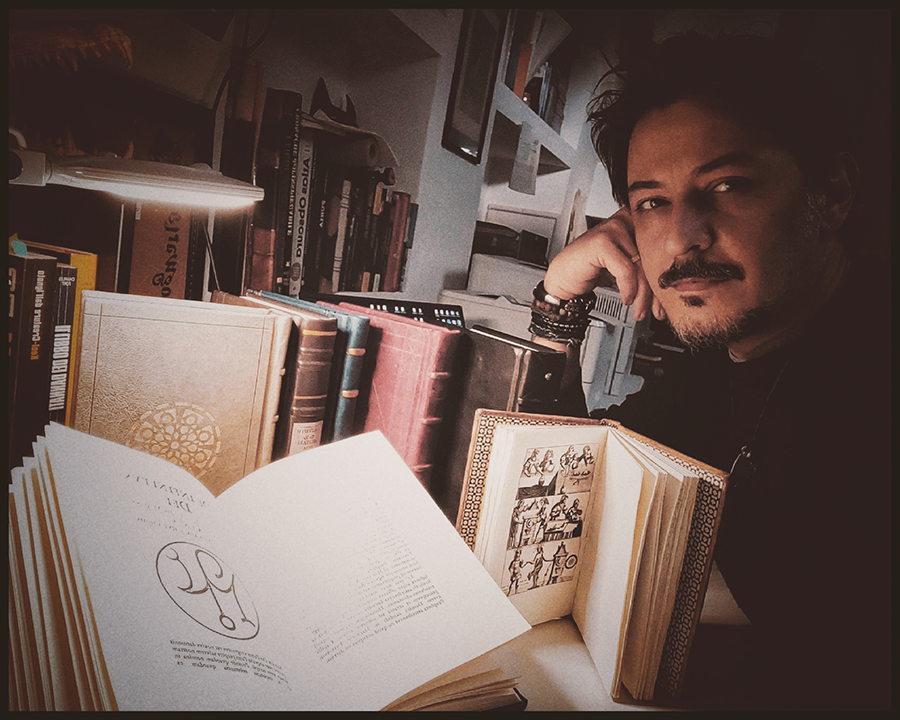

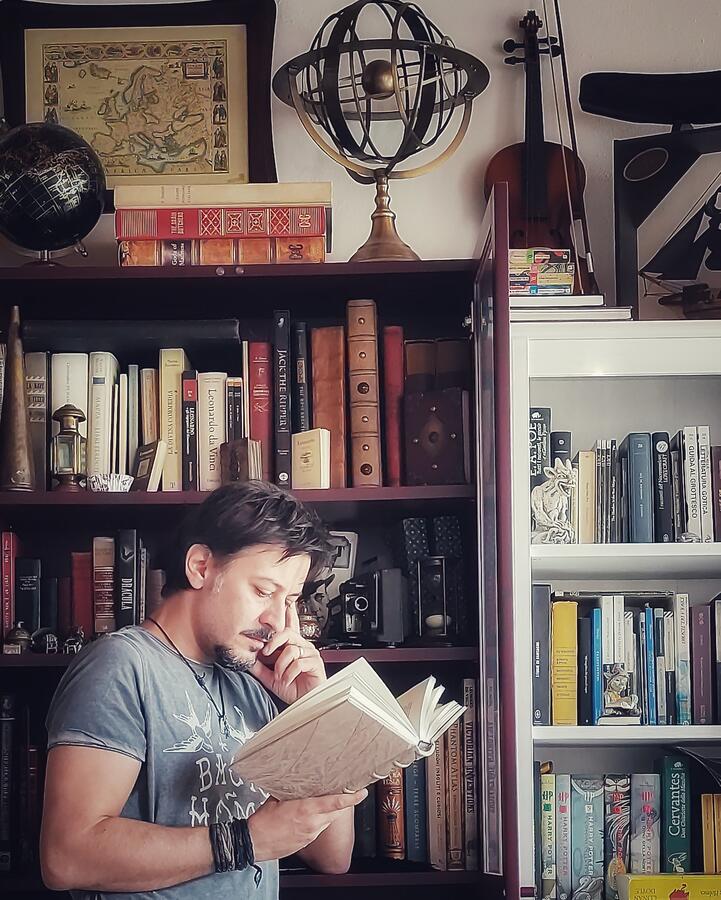
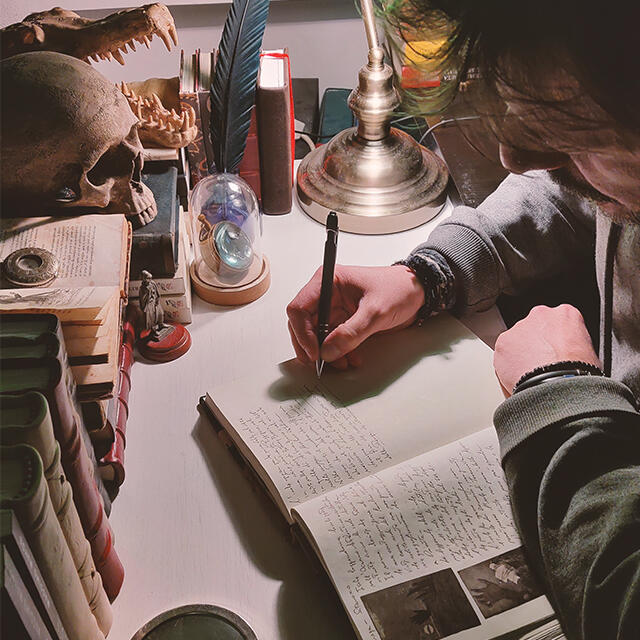
Of course, this is not something one can improvise overnight.
It requires knowledge of the field—and knowing what to look for. Searching is, in fact, the key word, because many works from the past have reached us damaged by worms, floods, neglect, and who knows what else. Finding complete copies is extremely difficult. There is a reason they are called “rare books.”
Sometimes we encounter titles missing entire pages, or leaves ravaged by worms and rodents—and that is where the real search begins. One must track down that specific edition, hoping a “twin” exists in better condition, with those very pages—238 and 239, say—intact, so they can be integrated where text has been lost or eroded.
But sometimes fortune is not on our side. The book may be the only surviving copy, and reconstructing its gaps can become a descent into mental exhaustion. To give you an idea: for four years we have been working on reconstructing a 700-page 16th-century work (which we cannot yet disclose), and we are still only one-third of the way through.
Why does it take so long? Because we possess seven different digital editions, each printed in different decades by different printers. Almost every page in each edition is damaged. For every single line, illustration, chapter—we must determine what can be salvaged and what cannot. Which edition to trust, which to discard. Whether the text aligns with the illustration beside it. And above all: which of these seven editions should serve as the foundation for the reconstruction? Which is in the best condition, and which in the worst?
And this is only the beginning.
Because sometimes no suitable “donor” page exists—or the differences are too great to allow integration. That is when the real “fun” begins. In such cases, we must map an entire well-preserved page, extract the best typographic characters, isolate them, identify the associated illustrations, and begin to… rewrite the page entirely—placing one character at a time, perfectly aligned, same spacing, same everything. And hope not to end up with orphan lines at the bottom.
This is manageable—if the reference page is readable.
Once reconstruction is complete, we move on to print testing. And here, despair often lurks nearby. There is no guarantee that colors and contrasts will survive the transition to print—or the unforgiving eye of the publisher. If something is wrong, it is corrected. No excuses.
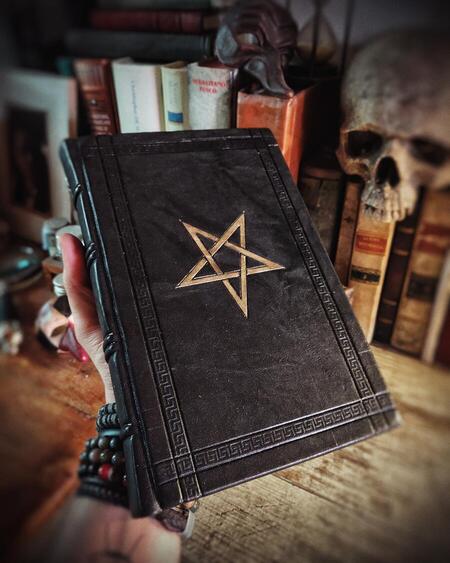
If it passes the test, we then define the cover layout. This too must follow certain principles, which is why we often develop multiple styles for a single edition. A Victorian-style leather cover for theMalleus Maleficarumwould hardly make sense, for example.
Materials and colors are chosen. Whether the cover should be hand-aged or not. Whether multiple variants should be offered. Whether a more affordable version is appropriate.
This is a crucial point: it would make little sense to sell a budget edition of Sherlock Holmes hand-bound. Anyone who wants a copy ofThe Hound of the Baskervillesby Doyle can find thousands of inexpensive editions. But for those who truly love Sherlock Holmes, we offer a hand-bound version—a unique, high-quality piece. The same applies toAlice’s Adventures Undergroundby Lewis Carroll, and many other works of the past.
Throughout this process, we have omitted the dozens of variables—read: problems—that inevitably arise. Here are just a few:
- removing stains or background textures from every page of a work while preserving the text for a clean facsimile print;
- searching for missing pages for days, only to discover historical pagination errors;
- fully re-typesetting texts from scratch (thus producing our original editions), such as Calmet’sDissertations on Vampires(1756), navigating archaic grammar that would make modern linguists shudder.
Just to name three.
A few curiosities
How long does it take to create a book?
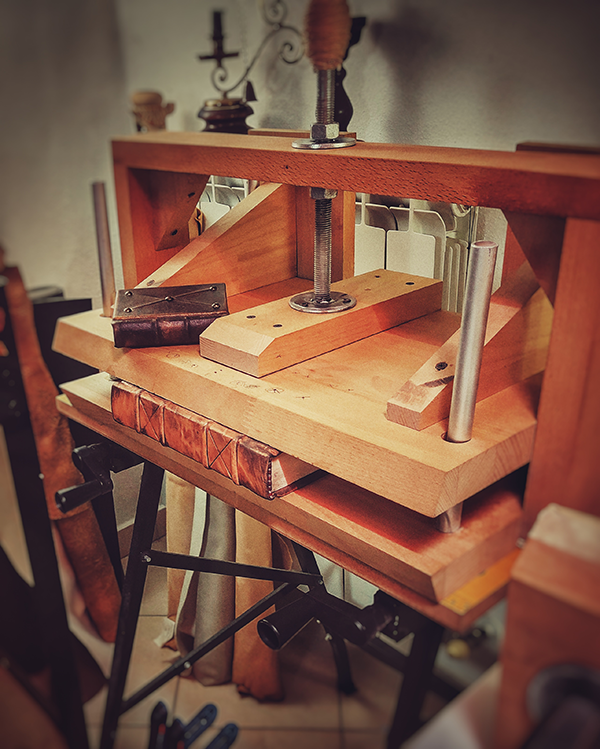
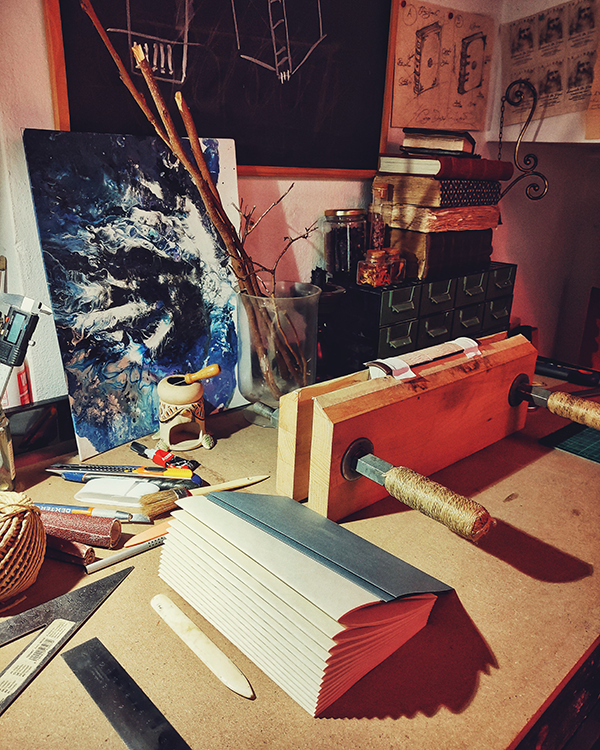
Excluding research and development (done only once), each book is printed and hand-bound on demand, requiring at least two days of work. This is mainly because the book undergoes at least two long “resting” phases (up to 8 hours each): one in the press to take its initial form, and one to bond perfectly with the cover.
Why don’t the books have the same cover as the original editions?
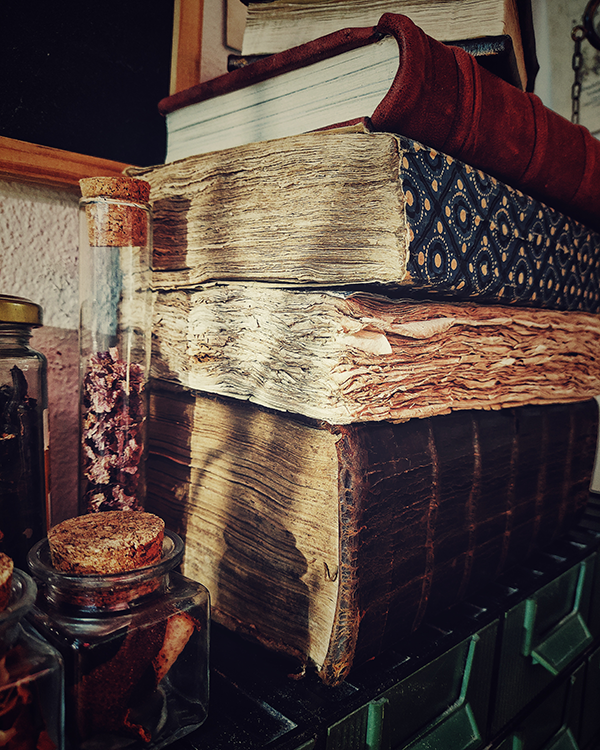
Because no two copies had the same cover—even within the same edition. In the past, printers sold books as loose sheets, which buyers then took to a bookbinder. Sometimes the same craftsman bound multiple copies, resulting in similar covers—but this was never guaranteed.
Do you have a physical shop?
Unfortunately, no—and if we did, we might have closed years ago due to prohibitive costs. Let’s be blunt: running an operation like Libriproibiti in a country like Italy, where art and culture are often treated as secondary concerns, is disheartening. Innovation and entrepreneurship are often seen as problems rather than opportunities.
If Libriproibiti is still alive, it is largely thanks to those who purchase from abroad. Our deepest gratitude goes to you: USA, Canada, France, Germany, Spain, the Netherlands, the United Kingdom, Austria, Belgium—and to those Italians who still cherish culture and beauty, and who, in their own way, stand with us against the ugliness of the world.
Thank you ♥